5 things to know before subscribing to nordic iptv
Nordic iptv services deliver live TV, sports, and on-demand content over your broadband connection instead of a cable or satellite dish. Before you hand over your payment details, there are five practical things that will save you money, frustration, and a very annoying Saturday afternoon.
I’ve been poking around the nordic iptv space for a couple of years now, mostly because I got tired of paying a cable company nearly 50 euros a month for channels I watched maybe twice a week. The promise of nordic iptv is real: thousands of channels, Scandinavian sports, Finnish free-to-air content, and massive on-demand libraries, all for a fraction of that price. But there’s a gap between the marketing page and what actually happens when you sit down with your remote. This guide closes that gap, honestly.
Table of Contents
- What nordic iptv actually is (and what it isn’t)
- The legal situation in Finland right now
- What your internet connection really needs to handle
- Channels, sports, and VOD: what you’ll actually get
- Devices, apps, and setup headaches to expect
- Pricing, trials, and what to watch out for
- Frequently Asked Questions
- Conclusion
What nordic iptv actually is (and what it isn’t)
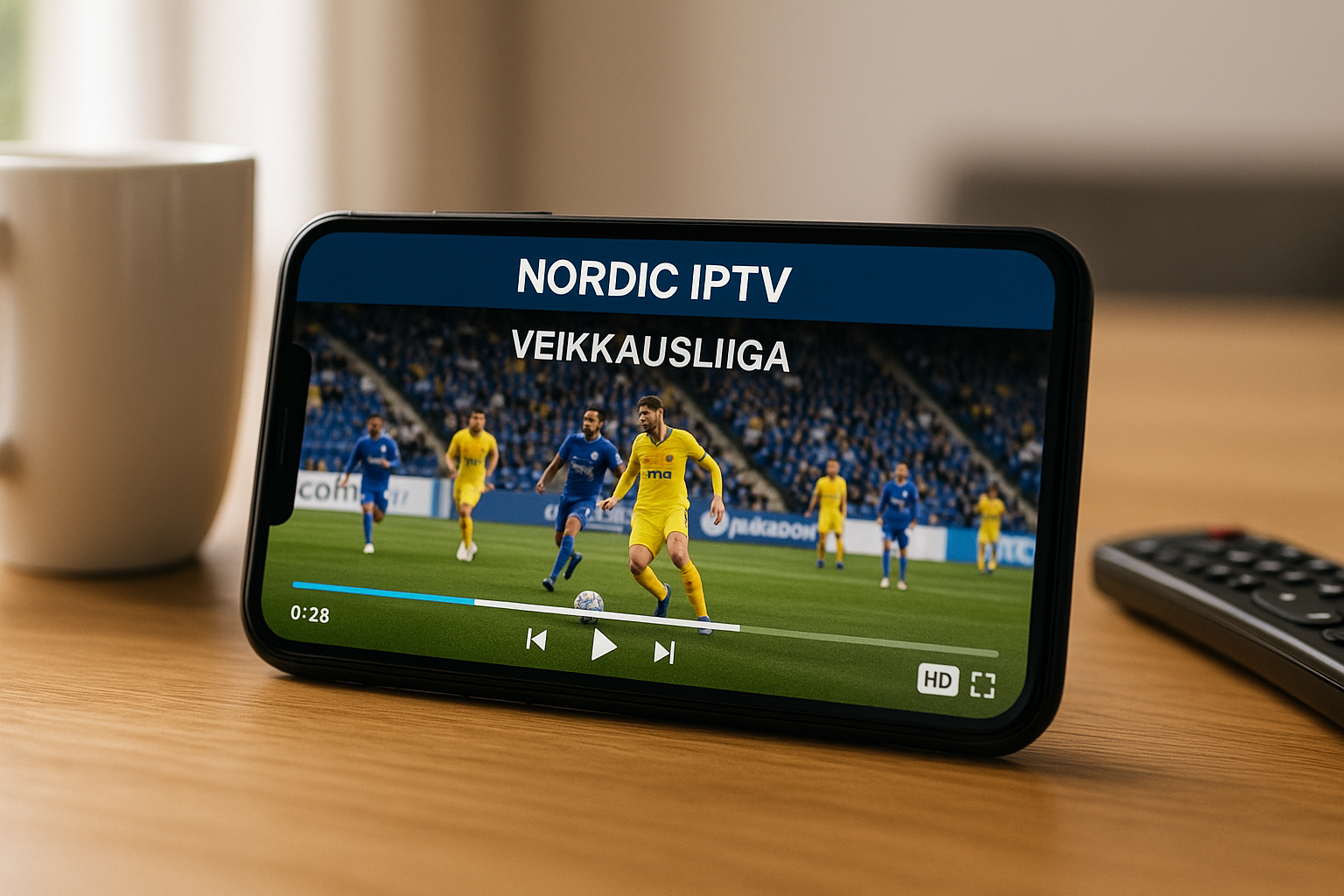
Think of it like this: regular cable TV is a pipe that runs into your wall, and the cable company controls everything in that pipe. Nordic iptv flips that model. Instead of a dedicated physical line, your TV channels travel as data packets over the same broadband connection you use to send emails and stream YouTube. The result looks identical on your screen, but the delivery mechanism is completely different.
The term “nordic iptv” (also sometimes written as IPTV Nordic, depending on which provider you’re looking at) refers broadly to internet-based TV services that focus on Scandinavian and Finnish content. Some of these are fully licensed, legitimate services. Others operate in a legal grey area. And a few are outright illegal streams repackaged in a slick interface. Knowing the difference matters more than most guides admit.
The three types of services using this name
At the legitimate end, you have ISP-backed services like IPTV platforms offered by major Finnish telecoms. They’re licensed, they carry the real Finnish and Nordic channels, and they cost roughly what you’d expect for a proper TV subscription.
Then there are independent subscription services that operate somewhere murkier. They advertise enormous channel counts (37,000 channels is a number I see constantly) and vast VOD libraries. Some of these have licensing deals; many don’t. The channel count is often inflated by duplicates, dead streams, and international channels that aren’t particularly useful if you live in Tampere.
Finally, there are peer-to-peer stream aggregators. These are almost always illegal. They tend to have the flashiest websites and the lowest prices. They’re also the ones that get shut down without warning, leaving you with nothing on a Sunday night during a Champions League match.
The distinction matters practically. Licensed services buffer less (because they serve content from Finnish servers with actual uptime agreements), have real customer support, and won’t vanish overnight. The grey-market ones can be significantly cheaper, but the risk profile is completely different.
“In 2023, Finnish rights holders and telecom operators successfully blocked multiple unlicensed IPTV services, with courts ordering ISPs to restrict access to specific domains.” — according to reporting by Tivi, Finland’s leading tech publication.
The legal situation in Finland right now
This is the part most nordic iptv review sites gloss over, and honestly, I get why. It’s uncomfortable. But you should know what you’re getting into before you subscribe to anything.
IPTV itself is completely legal. Full stop. It’s just a delivery technology, the same way streaming Netflix over your WiFi is legal. The legality question is about what content is being delivered and whether the provider has the rights to deliver it.
How Finnish copyright law applies here
Finnish copyright law (tekijänoikeuslaki) prohibits accessing or distributing copyrighted broadcast content without the rights holder’s permission. Under EU directives, Finnish courts have the authority to order ISPs to block access to sites that primarily distribute infringing content. And they have used that authority. Several services that were advertising aggressively in Finland two years ago are now blocked or have moved domains multiple times trying to stay accessible.
For the end user, the legal risk in Finland is currently low but not zero. Prosecution of individual subscribers is rare. The bigger practical risk is that the service you paid for three months in advance simply stops working because it got blocked or shut down. There’s no refund. There’s no appeals process. You’re just out the money.
If you want Nordic TV content with zero legal anxiety, the options are: your ISP’s own IPTV bundle, Yle Areena (free, and genuinely excellent for Finnish content), MTV Katsomo, Ruutu, or a licensed OTT service that covers Scandinavian channels. These won’t give you 37,000 channels, but they won’t disappear either.
The grey market isn’t going away, though
Realistically, the grey-market nordic iptv services still have hundreds of thousands of users across Finland and the Nordics. Enforcement targets the services, not individual subscribers. Whether you use one is a personal choice. Just go in with open eyes rather than believing the “100% legal” badge some providers slap on their homepage.
What your internet connection really needs to handle
This is where I spent a genuinely frustrating Tuesday evening last autumn. I subscribed to a service that looked great on paper, and the first two hours were consumed by buffering, pixelation, and one stream that just refused to load at all. The problem wasn’t the service (entirely). It was my router placement and a congested home network.
Here’s the practical breakdown of what you actually need.
Minimum speeds by stream quality
- SD streams (standard definition): 5 Mbps per stream. You’d struggle to find a Finnish household with less than this in 2025, but worth confirming.
- Full HD (1080p) streams: 10-15 Mbps per active stream. This is where most people watch most content.
- 4K HDR streams: 25-40 Mbps per stream, sustained. Not burst speed. Sustained.
- Multiple simultaneous streams: Multiply accordingly, and add 20% for overhead.
Most Finnish broadband packages from DNA, Elisa, or Telia handle these numbers easily on paper. The real-world issue is that your WiFi router is almost certainly the bottleneck, not your ISP’s line speed. A 4K nordic iptv stream pushing 35 Mbps through a five-year-old router over 2.4GHz WiFi from two rooms away is going to buffer. An ethernet cable to your streaming device fixes this 90% of the time.
Server location is the other half of the equation. A service routing your stream through servers in Eastern Europe or the US adds 80-120ms of latency compared to a service with Finnish or Swedish endpoints. That extra latency doesn’t slow down downloads noticeably, but it makes live sports streams feel slightly behind real-time and contributes to buffering on congested networks. Take iptv subscription as an example: they run servers in Helsinki specifically to minimize round-trip time for Finnish users, which matters more for live channel reliability than it does for on-demand content where buffering can pre-load.
One more thing: if you’re on a mobile data plan rather than fixed broadband, 4K streaming will burn through your data cap in under two hours. A 4K stream at 25 Mbps sustained is roughly 11GB per hour.
Channels, sports, and VOD: what you’ll actually get
The marketing numbers are almost meaningless. “37,000 channels” sounds incredible until you realize that includes 400 variants of the same news channel from 40 countries, dozens of dead links, and test streams. What you actually want to know is: does it have the specific things I watch?
For Finnish viewers, the practical checklist looks like this:
Finnish and Nordic channels to look for
- Yle TV1, Yle TV2, Yle Fem (free-to-air Finnish national channels)
- MTV3, Nelonen, Sub, Jim (commercial Finnish channels)
- SVT1, SVT2, TV4 (Swedish public and commercial)
- NRK1, NRK2 (Norwegian public broadcasting)
- DR1, DR2 (Danish public broadcasting)
- Viaplay channels (sports and entertainment, if licensed)
- C More sports channels
The free-to-air channels are easy to find in almost any nordic iptv package because the streams are widely available. The premium sports channels (Viaplay, C More) are the ones where licensing actually matters. A grey-market service might carry them as unauthorized re-streams, which means they can be blocked or taken down with no notice, often in the middle of a Veikkausliiga playoff match. Ask me how I know.
What VOD libraries actually look like
The “200,000 movies and series” figure is similarly inflated. When I tested a few services back-to-back, the actual unique Finnish or Nordic titles in those libraries was usually under 2,000. The rest is English-language Hollywood content you can get on Netflix or Prime anyway. If Nordic-language series are your thing (Finnish crime dramas, Swedish thrillers, Norwegian comedies), check specifically whether the service carries them before subscribing. Ask for a trial or a channel list.
Nordic football coverage is a useful test case. Services like iptv subscription include Veikkausliiga and Allsvenskan within their standard tier, while plenty of the cheaper competitors either don’t carry them at all or put them behind a separate sports add-on that costs almost as much as the base plan. If Finnish football is a priority, confirm this before paying.
Also worth checking: How to set up iptv nordic on your TV in Finland covers the actual activation process in detail, which is more involved than most providers admit on their pricing page.
Devices, apps, and setup headaches to expect
The device compatibility situation is more complicated than “works on everything.” Let’s be specific.
Where nordic iptv actually works well
Android TV devices and Amazon Fire TV sticks are the sweet spot. Almost every nordic iptv service distributes an APK (Android application package) that installs in minutes, and the remote control experience is comfortable. If you have a newer Samsung or LG Smart TV, some services have dedicated apps in the TV’s app store, but many don’t, which means you’re sideloading an APK or using a workaround.
Apple TV is the awkward one. iOS and tvOS are restrictive about sideloading, so your options are limited to services that have an official App Store app (uncommon for grey-market providers) or using an app like iptv box as a middleman.
For playlist-based setup (where you enter an M3U URL or Xtream Codes credentials), the app you use matters enormously. IPTV Smarters Pro is the most common recommendation, and The playlist format that iptv smarters pro actually requires is something many first-time users get wrong, causing hours of unnecessary troubleshooting. The M3U URL format varies between providers, and even a small syntax error means blank channel lists.
MAG boxes and older hardware
MAG boxes (the physical set-top boxes popular in the IPTV world) use a different authentication method called a MAC address. You give your provider the MAC address printed on the box, they activate it on their server, and the box loads your channel list automatically. It’s actually a smoother experience than app-based setup when it works. The downside is that if the service goes down or gets blocked, you can’t easily switch to a different provider on the same hardware without a firmware tweak.
Computers are the most flexible option. VLC, Kodi, or any browser-based player handles M3U playlists, and you’re not dependent on app store approval or APK installation. For occasional use or testing a trial, this is genuinely the easiest entry point.
Pricing, trials, and what to watch out for
Nordic iptv pricing in the Finnish market right now ranges from roughly 6 euros to 20 euros per month, depending on the service and tier. The cheapest options are almost universally the grey-market ones. Licensed telecom-backed IPTV bundles tend to sit at the top of that range, often bundled with your broadband package.
The trial trap
Many services offer a 24-48 hour free trial. Take it. Always. A trial is the only way to actually test stream quality on your specific home network, with your specific device, at the time of day you actually watch TV (evening peak hours are very different from a Tuesday morning test). Services that refuse to offer any trial period are, in my experience, worth avoiding.
Watch out for auto-renewal clauses. Some cheaper services charge you monthly via PayPal or credit card recurring payments, and the cancellation process involves emailing a support address that may or may not respond. Read the terms before you subscribe.
What multi-connection pricing actually means
Most services sell subscriptions by the number of simultaneous streams. A single-connection plan means only one device can watch at a time. A family of four watching different things in different rooms needs at least a 3-4 connection plan. This is where the price comparison with a cable bundle gets more nuanced: a nordic iptv service at 6 euros per month for one connection versus your cable bill covering the whole household isn’t a fair comparison. Calculate the per-household cost honestly.
You can also look at related services for comparison. Options like jnt iptv and iptv pro take different approaches to multi-connection pricing, which is worth understanding if you’re shopping around.
Red flags in pricing pages
- No refund policy mentioned anywhere
- Payment only via cryptocurrency or gift cards
- Channel count listed but no actual channel list available
- “Lifetime subscription” offers (services don’t last forever, and yours probably won’t either)
- Prices that seem impossibly low, like 2 euros per month for 37,000 channels
Frequently Asked Questions
Is IPTV legal in Finland?
IPTV as a technology is completely legal in Finland. The legality depends on whether the provider holds proper broadcast rights for the content it delivers. Licensed ISP-backed IPTV services are legal. Grey-market services restreaming content without rights operate in violation of Finnish copyright law, even if individual subscribers face little direct enforcement risk.
What is the best IPTV service for Finnish viewers?
There’s no single answer because it depends on what you watch. For guaranteed Finnish channel access and zero legal risk, your ISP’s own IPTV bundle or Yle Areena is the safest choice. For broader Scandinavian content and sports at lower cost, independent nordic iptv services vary significantly in quality. Always test with a trial before committing to a longer subscription.
How much does a nordic iptv subscription cost per month?
Grey-market nordic iptv services typically range from 6 to 15 euros per month for a single-connection plan. Licensed telecom IPTV packages in Finland usually sit between 15 and 25 euros monthly, often bundled with broadband. Pricing varies by tier, connection count, and whether sports channels are included in the base package or added separately.
What sports does nordic iptv show?
Coverage depends entirely on the specific service. Most nordic iptv packages include Veikkausliiga, Liiga (Finnish ice hockey), Allsvenskan, and major European football leagues. Premium sports rights like Viaplay’s exclusive content or F1 broadcasts are less consistently available, especially in grey-market services where those streams can disappear without notice due to rights enforcement.
What internet speed do I need for nordic iptv?
For stable HD streaming, you need at least 10-15 Mbps sustained per active stream. For 4K content, budget 25-40 Mbps per stream. Most Finnish fixed broadband connections handle this comfortably, but your WiFi setup and router placement matter more than raw line speed. A wired ethernet connection to your streaming device eliminates most buffering issues immediately.
Conclusion
Nordic iptv is genuinely worth considering if you’re paying too much for a cable bundle you half-use. But it’s not a magic shortcut. The legal question is real, your internet setup matters more than the marketing suggests, and the channel count numbers are almost always exaggerated beyond usefulness. Focus on whether the specific channels and sports you actually watch are there, test with a trial period before committing money, and get an ethernet cable between your router and your TV before you blame the service for buffering.
Personally, after going through all of this myself, I’d start with a service that has Finnish server infrastructure and a clear multi-connection pricing model. iptv subscription fits that description and is worth a trial run before you commit to anything longer. Nordic iptv done right is a genuinely better deal than cable. But you have to know what you’re getting into first.